Gumbo (Classic Louisiana Comfort Food)
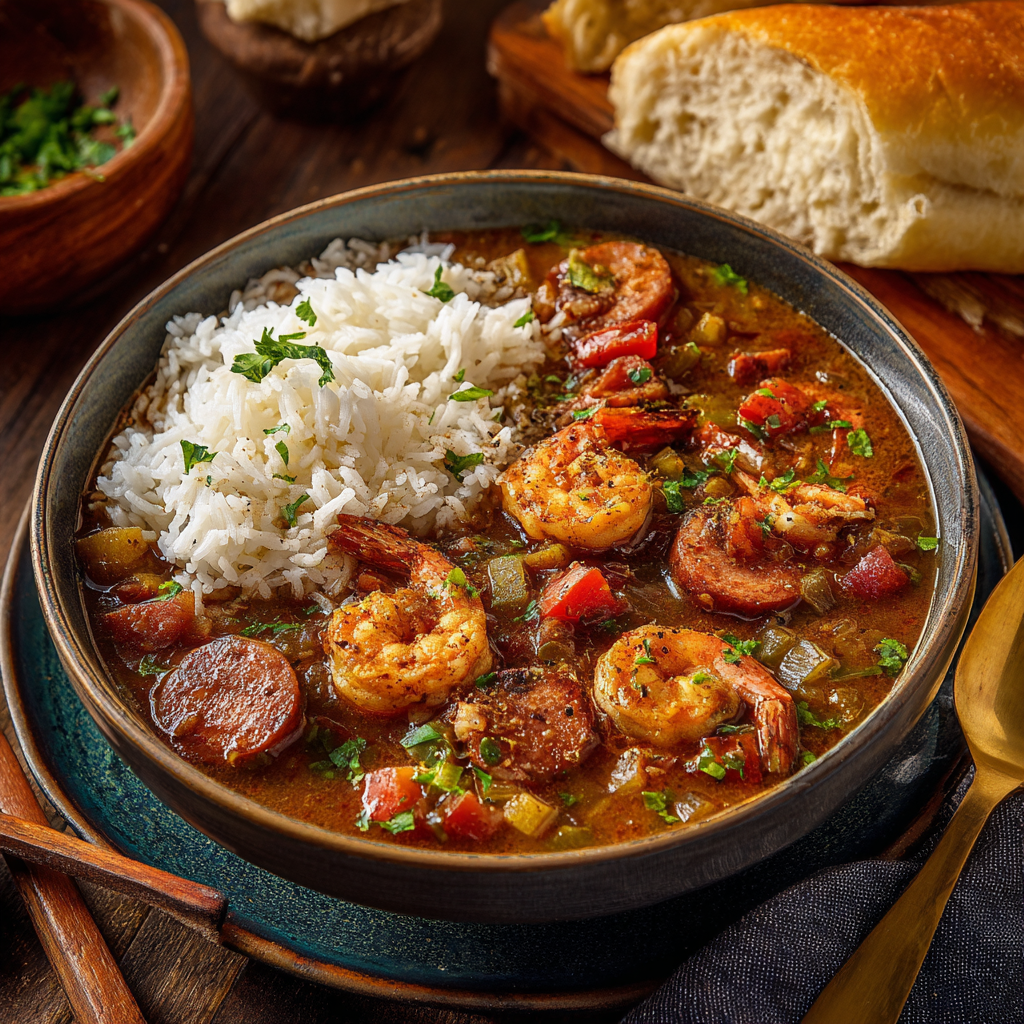
Gumbo is more than just a meal — it’s a story simmered low and slow, a celebration of culture, and one of the most iconic dishes to ever come out of Louisiana. Rich, thick, deeply flavorful, and layered with smoky sausage, tender shrimp, aromatic vegetables, and a dark, nutty roux, gumbo is comfort food at its absolute finest.
Whether you’re making gumbo for a special gathering, a cozy weekend dinner, or simply craving something hearty and soul-warming, this classic recipe delivers authentic flavor with time-tested techniques. Served over fluffy white rice and finished with gumbo filé powder, this dish is bold, satisfying, and unforgettable.
In this comprehensive guide, you’ll learn everything you need to know about gumbo — from its fascinating history and cultural roots to step-by-step cooking tips, ingredient substitutions, variations, storage tips, and common mistakes to avoid.
What Is Gumbo?
Gumbo is a thick, savory stew that originated in Louisiana and blends culinary influences from West Africa, France, Spain, and Native American cultures. At its core, gumbo is defined by three essential elements:
-
A deeply browned roux
-
The “holy trinity” of vegetables (onion, celery, bell pepper)
-
A flavorful protein combination (such as sausage, shrimp, chicken, or seafood)
Unlike soups, gumbo is rich and hearty, with a velvety texture that coats the spoon. It’s traditionally served over rice, which balances the bold spices and absorbs the flavorful broth.
The History of Gumbo
The origins of gumbo stretch back centuries. The word gumbo is believed to come from the West African word “ki ngombo”, meaning okra — one of the earliest thickening agents used in gumbo. Enslaved Africans brought okra to Louisiana, where it became a staple ingredient.
French settlers contributed the technique of making a roux, while Native Americans introduced filé powder, made from ground sassafras leaves. Spanish influence can be seen in the use of tomatoes in some versions, especially Creole gumbo.
Over time, gumbo evolved into many regional styles, but all share the same soul: slow cooking, layered flavor, and communal tradition.
Cajun vs Creole Gumbo
One of the most common questions about gumbo is the difference between Cajun gumbo and Creole gumbo.
Cajun Gumbo
-
Typically darker, thanks to a deeply browned roux
-
Usually does not include tomatoes
-
Often features chicken, sausage, or game meats
-
Rustic and bold
Creole Gumbo
-
Often includes tomatoes
-
Lighter roux
-
Commonly includes seafood like shrimp or crab
-
Slightly more refined flavor profile
This recipe leans toward a Creole-style gumbo, using tomatoes and shrimp while still relying on a dark roux for depth.
Why This Gumbo Recipe Works
This gumbo recipe is carefully balanced to deliver:
-
A rich, chocolate-colored roux without bitterness
-
Perfectly tender vegetables that melt into the stew
-
Smoky andouille sausage for depth
-
Juicy shrimp added at the right time
-
Filé powder for authentic Louisiana flavor
-
Long simmer time to fully develop flavor
Every step is intentional, ensuring a gumbo that tastes even better the next day.
Ingredients Breakdown
Roux
-
Unsalted butter – Adds richness and helps brown evenly
-
All-purpose flour – Thickens the gumbo and creates deep flavor
The roux is the backbone of gumbo. Cooking it slowly until dark brown unlocks intense nutty notes that define the dish.
Vegetable Mixture (The Holy Trinity)
-
Celery
-
Yellow onion
-
Green bell pepper
-
Garlic
This combination forms the aromatic base of gumbo, similar to mirepoix in French cooking.
Gumbo Base
-
Beef broth – Adds body and savory depth
-
Andouille sausage – Smoky and spicy (kielbasa works as a substitute)
-
Stewed tomatoes & tomato sauce – Classic Creole touch
-
Hot sauce – Adds heat without overpowering
-
White sugar – Balances acidity
-
Cajun seasoning – Brings warmth and spice
-
Dried thyme – Earthy herbal note
-
Bay leaves – Deepens the aroma
-
Worcestershire sauce – Umami boost
Seafood
-
Shrimp – Added near the end to prevent overcooking
Thickener & Finishing Touch
-
Gumbo filé powder – Adds thickness and authentic flavor
Step-by-Step Instructions
1. Make the Roux
In a large 6-quart pot over medium-low heat, melt the butter. Add the flour and whisk continuously until smooth.
Cook slowly for 30–40 minutes, whisking constantly, until the roux reaches a deep brown color. It should smell nutty, not burnt.
Remove from heat and let cool slightly.
2. Prepare the Vegetables
While the roux cools, add celery, onion, bell pepper, and garlic to a food processor. Pulse until finely chopped.
3. Cook the Trinity
Add the vegetable mixture to the roux and return the pot to medium-low heat. Cook for 8–12 minutes, stirring, until vegetables are tender.
4. Add the Broth
Slowly whisk in the beef broth. Bring to a gentle boil, allowing the mixture to thicken.
5. Build the Flavor
Reduce heat to low. Add sausage, tomatoes, tomato sauce, hot sauce, sugar, Cajun seasoning, and thyme.
Add bay leaves and simmer uncovered for 45 minutes, stirring occasionally.
6. Add Filé Powder
Stir in 2 teaspoons of gumbo filé powder and continue simmering for 15 minutes.
7. Add Shrimp
Remove bay leaves. Add shrimp and Worcestershire sauce. Cook over low heat for 45–60 minutes, allowing flavors to meld.
8. Finish & Serve
Stir in remaining filé powder. Serve hot over cooked white rice.
Pro Tips for the Best Gumbo
-
Never rush the roux — low and slow is key
-
Stir constantly to prevent burning
-
Add shrimp last to keep them tender
-
Let gumbo rest — flavor improves with time
-
Taste before serving and adjust seasoning
Common Gumbo Mistakes to Avoid
-
Burning the roux
-
Adding filé powder too early
-
Overcooking shrimp
-
Using high heat during simmer
-
Skipping the resting time
Gumbo Variations
Chicken and Sausage Gumbo
Swap shrimp for chicken thighs.
Seafood Gumbo
Add crab, oysters, or crawfish.
Okra Gumbo
Use okra instead of filé powder as the thickener.
Spicy Gumbo
Increase Cajun seasoning or hot sauce.
What to Serve with Gumbo
-
White rice
-
Cornbread
-
French bread
-
Potato salad (Louisiana-style)
Storage & Reheating
Refrigerator
Store in an airtight container for up to 4 days.
Freezer
Freeze for up to 3 months (add shrimp after reheating if possible).
Reheating
Reheat gently over low heat, stirring occasionally.
PrintGumbo (Classic Louisiana Comfort Food)

Gumbo is a rich, hearty Louisiana stew made with a dark roux, smoky andouille sausage, tender shrimp, tomatoes, and aromatic vegetables. Slowly simmered and served over fluffy white rice, this comforting dish is full of deep, bold flavor and perfect for family meals or special gatherings.
Ingredients
Roux
-
¾ cup (1½ sticks / 170 g) unsalted butter
-
1 cup (125 g) all-purpose flour
Vegetable Mixture
-
2 celery ribs, roughly chopped (about 1 cup)
-
1 large yellow onion, roughly chopped (about 1 cup)
-
1 large green bell pepper, roughly chopped (about 1 cup)
-
2 tsp garlic, minced
Gumbo
-
10 cups beef broth
-
1 ring (14 oz) andouille sausage or kielbasa, sliced
-
1 can (14.5 oz) stewed tomatoes
-
1 can (6 oz) tomato sauce
-
2 tbsp hot sauce
-
1 tbsp white sugar
-
½ tsp Cajun seasoning
-
½ tsp dried thyme
-
4 tsp gumbo filé powder, divided
-
4 bay leaves
-
3 lb medium shrimp, peeled and deveined
-
2 tbsp Worcestershire sauce
-
Cooked white rice, for serving
Instructions
-
Make the roux:
In a large 6-quart pot over medium-low heat, melt the butter. Add flour and whisk until smooth. Cook, whisking constantly, for 30–40 minutes until the roux becomes a deep brown color. Do not let it burn. Remove from heat and whisk for a few minutes to cool slightly. -
Prepare the vegetables:
While the roux cools, add celery, onion, bell pepper, and garlic to a food processor. Pulse until finely chopped. -
Cook the vegetables:
Stir the vegetable mixture into the roux. Return the pot to medium-low heat and cook for 8–12 minutes, stirring often, until vegetables are tender. -
Add broth:
Slowly whisk in the beef broth. Bring to a gentle boil, about 15–20 minutes, stirring occasionally. -
Build the gumbo:
Reduce heat to low. Add sausage, stewed tomatoes, tomato sauce, hot sauce, sugar, Cajun seasoning, thyme, and bay leaves. Simmer uncovered for 45 minutes. -
Season and simmer:
Stir in 2 teaspoons of gumbo filé powder. Continue simmering for 15 minutes. -
Add shrimp:
Remove bay leaves. Add shrimp and Worcestershire sauce. Cook on low for 45–60 minutes, allowing flavors to fully develop. -
Finish and serve:
Stir in the remaining gumbo filé powder. Serve hot over cooked white rice.
Notes
-
Take your time with the roux: A dark roux adds deep flavor—low heat and constant stirring are key.
-
Don’t rush the simmer: Long, slow cooking allows flavors to fully develop.
-
Use andouille if possible: It adds authentic smoky flavor.
-
Add shrimp last: This keeps them tender and juicy.
-
Nutrition Overview (Estimated)
-
High in protein
-
Rich in flavor without being overly heavy
-
Balanced with vegetables and seafood
Frequently Asked Questions About Gumbo
Is gumbo better the next day?
Yes — flavors deepen overnight.
Can I make gumbo without filé powder?
Yes, use okra or a darker roux.
Is gumbo gluten-free?
Traditional gumbo is not due to the roux, but gluten-free flour can be used.
Why Gumbo Is a Timeless Classic
Gumbo isn’t just food — it’s tradition, history, and comfort in a bowl. Every pot tells a story, and every spoonful carries generations of flavor. Whether shared at a celebration or enjoyed quietly at home, gumbo always brings people together.
Final Thoughts
This Gumbo recipe is a true celebration of Louisiana cooking — rich, soulful, and deeply satisfying. From the carefully crafted roux to the slow simmer that builds layers of flavor, every step honors the tradition behind this iconic dish.
If you’ve never made gumbo before, this recipe is the perfect place to start. And if you’re already a gumbo lover, this version will earn a permanent spot in your recipe collection. Take your time, trust the process, and enjoy the reward: a pot of gumbo that tastes like home.